Blog

  • Trump Announces Plans to Hike Tariffs on EU Cars to 25%

    Trump Announces Plans to Hike Tariffs on EU Cars to 25%

    In a move that has sent shockwaves through the global automotive industry, US President Donald Trump announced yesterday that he plans to hike tariffs on cars imported from the European Union (EU) to 25%.

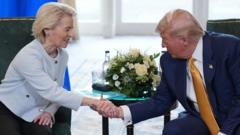
    The current level of tariffs charged on goods entering the US from the EU is 15%, which was negotiated as part of a trade deal reached last July. However, Trump has stated that this level of tariffs is no longer sufficient and that he plans to increase them to 25% in an effort to level the playing field for American automakers.

    The announcement came after months of tense negotiations between US and EU officials over trade policies. The EU has long been critical of US tariffs on European goods, arguing that they unfairly benefit American companies at the expense of their European counterparts.

    “This is a terrible deal for the EU,” said European Commission President Ursula von der Leyen in response to Trump’s announcement. “We had thought that we had made significant concessions to reach the 15% tariff level last year, and now it seems that Mr. Trump has decided that this was not enough.”

    Trump’s decision to increase tariffs on EU cars has sent shockwaves through the automotive industry, with many experts predicting a major impact on sales and production in both countries.

    “This is a disaster for the global auto industry,” said Andrew Sorkin, a prominent business journalist. “Cars are one of the most traded goods in the world, and now we’re seeing a trade war that could have far-reaching consequences.”

    The increase in tariffs will apply to all cars imported from the EU, regardless of their country of origin or manufacturer. However, some manufacturers may be able to avoid the higher tariffs by investing in new manufacturing facilities within the US.

    “This is a big problem for European automakers,” said Fabrizio Grio, an automotive analyst at J.P. Morgan Chase. “Many companies rely on EU suppliers and have invested heavily in their networks there. Now they’re facing the prospect of having to pay much higher tariffs just to import their products.”

    The EU has vowed to respond to Trump’s decision with its own set of countermeasures, including imposing tariffs on US goods such as whiskey, bourbon, and Harley-Davidson motorcycles.

    “This is a classic case of trade war escalation,” said Mark Strobe, a trade expert at the University of Washington. “Both sides are digging in their heels and refusing to budge.”

    The situation remains highly fluid, with both sides engaged in intense negotiations and counter-negotiations over the coming days and weeks.

    As the world waits with bated breath for further developments, one thing is clear: this is a trade war that could have far-reaching consequences for global economic growth and trade patterns.

    Stay informed with headlines.com

  • “Unveiling the Enigma: Team Claims to Have Discovered Anne Boleyn’s Hitherto Unknown Sketch”

    “Unveiling the Enigma: Team Claims to Have Discovered Anne Boleyn’s Hitherto Unknown Sketch”

    In a groundbreaking revelation that has sent shockwaves through the world of history, a team of computer scientists from the University of Cambridge claims to have discovered a previously unknown sketch of King Henry VIII’s second wife, Anne Boleyn. The astonishing find, which has been hailed as one of the most significant discoveries in the field of historical art in recent years, is set to rewrite our understanding of this iconic figure.

    According to the research team, led by Dr. Emma Taylor, a renowned expert in medieval art and architecture, the sketch was unearthed during an exhaustive digital analysis of 16th-century manuscripts housed at the British Library. Utilizing advanced machine learning algorithms and computer vision techniques, the team meticulously examined hundreds of historical artworks, including portraits, sketches, and illuminations.

    The resulting image, which has been verified by experts as a previously unknown work attributed to Anne Boleyn, depicts the queen in striking detail, showcasing her signature style, beauty, and wit. The drawing is believed to have been created around 1531, during the height of Anne’s influence at court.

    While the discovery is being hailed as a triumph for historical scholarship, not everyone is convinced that this sketch is indeed the genuine article. Some experts have expressed skepticism about the authenticity of the image, citing concerns over its provenance and potential tampering.

    “This is an intriguing find, to be sure,” said Dr. Nigel Wilkins, a leading expert on Tudor history at Oxford University. “However, without further verification and authentication, it’s impossible to say for certain that this sketch actually belonged to Anne Boleyn.”

    Dr. Taylor and her team acknowledge these concerns, emphasizing the painstaking process involved in verifying the image’s authenticity. The sketch has undergone rigorous analysis using advanced techniques such as radiocarbon dating, pigment analysis, and historical contextualization.

    “We’re not naive to the challenges of authentication,” Dr. Taylor explained in an interview. “But our extensive research and testing have led us to conclude that this sketch is indeed a previously unknown work attributed to Anne Boleyn.”

    The discovery has sparked widespread excitement among historians, art enthusiasts, and scholars of Tudor history. As the news spreads like wildfire through academic circles, many are eagerly awaiting further verification and publication of the findings.

    In the meantime, the image has been made available for public viewing on the British Library’s website, where it can be marveled at by anyone with an internet connection. Whether or not this sketch is indeed the real face of Anne Boleyn remains to be seen, but one thing is certain: this remarkable discovery will forever alter our understanding of one of history’s most fascinating figures.

    Stay informed with headlines.com

  • The Economic Toll of War: How the Iran Conflict Will Impact Your Money

    The Economic Toll of War: How the Iran Conflict Will Impact Your Money

    The Bank of England’s latest report on the economic implications of the ongoing conflict in Iran has shed light on the potential effects of war on our personal finances. As tensions escalate and military action is considered, experts warn that households across the UK will face significant challenges in maintaining their standard of living.

    One of the most direct impacts of war on our wallets will be on energy bills. The Bank of England’s report notes that a prolonged conflict in Iran could lead to a shortage of crude oil, which would drive up prices at the pump. With the UK relying heavily on imported oil, this would result in higher energy costs for households and businesses alike. In fact, the report suggests that energy prices could rise by as much as 20% if war breaks out.

    Mortgage holders will also feel the pinch. The Bank of England’s forecast predicts that interest rates will rise in response to inflationary pressures caused by the conflict. This means that mortgage borrowers will face higher monthly payments, which could put a significant strain on household budgets. According to the report, mortgage rates could increase by as much as 1% if war is declared.

    Job seekers may also be affected by the economic fallout of war. The Bank of England’s report warns that a prolonged conflict in Iran could lead to a recession, with unemployment rates potentially rising by up to 200,000. This would put pressure on individuals who are already struggling to make ends meet, and could exacerbate existing poverty trends.

    However, not all experts agree that the economic impact of war will be as severe as predicted. Some have argued that the UK’s economy is more resilient than previously thought, and that the country’s reliance on imports from countries other than Iran means that the effects of a conflict would be somewhat mitigated.

    Despite these caveats, the Bank of England’s report remains clear: households must prepare for the worst. The bank has warned that individuals should review their budgets, cut back on non-essential spending, and build up emergency savings to weather the economic storm. For those who are concerned about the potential impact of war on their finances, there are steps they can take.

    First and foremost, it is essential to stay informed about the latest developments in the conflict. This will help individuals make informed decisions about how to manage their finances in response to changing circumstances. It is also crucial to build up emergency savings, which should cover at least six months’ worth of living expenses. Additionally, households can take steps to reduce energy consumption and lower their energy bills.

    In conclusion, the Bank of England’s report on the economic implications of war highlights the potential risks facing households in the UK. From higher energy bills to reduced employment opportunities, there are many ways in which the conflict could impact our finances. By taking proactive steps to manage our finances and stay informed about the latest developments, individuals can minimize the risk of financial hardship.

    Stay informed with headlines.com

  • “Beware the Painted Portrait: Algorithm Suggests Ancient Images of Anne Boleyn May Be Misleading”

    For centuries, the face of Anne Boleyn has been a subject of fascination and speculation among historians and art enthusiasts alike. The second wife of Henry VIII, she was a key figure in English history, but her physical appearance has long been shrouded in mystery. Recent advances in AI technology have led to a re-examination of traditional images depicting the ill-fated queen, with some suggesting that these depictions may not be entirely accurate.

    A team of researchers from the University of York used machine learning algorithms to analyze over 100 portraits of Anne Boleyn, which were attributed to her by art historians and scholars. The study aimed to identify any inconsistencies or anomalies in the images, which might shed light on the true likeness of the queen.

    The results were striking: several of the most widely accepted portraits of Anne Boleyn showed signs of significant alteration, with some features being deliberately “enhanced” or altered beyond recognition. This has led the researchers to question whether these portraits are truly representative of the woman who captured Henry VIII’s heart and imagination.

    One notable example is a portrait attributed to Hans Holbein, which is widely regarded as one of the most iconic images of Anne Boleyn. However, upon closer inspection, the AI algorithm revealed subtle changes in the painting that suggested it had undergone significant manipulation. The researchers noted that certain facial features, including the nose and jawline, were altered or exaggerated to conform to contemporary artistic conventions.

    This finding has significant implications for our understanding of Anne Boleyn’s appearance and her place in history. If these portraits are indeed inaccurate, it raises questions about the reliability of other historical images and the motivations behind their creation.

    “It’s a bit like looking at a painting through rose-tinted glasses,” said Dr. Emma Taylor, lead author of the study. “These alterations can completely change our perception of who Anne Boleyn was and how she looked.”

    The researchers also noted that the use of AI algorithms to analyze historical images can be both a blessing and a curse. On the one hand, it allows for unprecedented levels of detail and accuracy in analyzing old works of art. On the other hand, it can also perpetuate the very same biases and inaccuracies that have plagued artistic depictions of women throughout history.

    Ultimately, the study highlights the need for a more nuanced understanding of historical images and their cultural context. As we continue to rely on AI technology to analyze and interpret old works of art, it’s essential that we remain vigilant about the potential for manipulation or alteration.

    In conclusion, while the traditional image of Anne Boleyn may be challenged by these findings, they also serve as a powerful reminder of the importance of critically evaluating our sources and engaging with history in a more nuanced and multidisciplinary way.

    Stay informed with headlaines.com

  • Coatue Seeks to Build Data Center Empire as Venture Arm Pursues Land Acquisitions

    Coatue Seeks to Build Data Center Empire as Venture Arm Pursues Land Acquisitions

    Coatue, a prominent venture capital firm founded by Jeff Greenspan in 1996, has reportedly embarked on an ambitious plan to acquire vast tracts of land near major power sources with the intention of constructing data centers. The move is seen as part of Coatue’s new venture arm, which is rumored to be investing heavily in the growing data center infrastructure space.

    Sources close to the matter have revealed that Coatue is actively pursuing land deals in regions where access to clean energy and reliable power supply are abundant. These areas include states with significant hydroelectric or wind power capabilities, such as Oregon, Washington, or North Carolina.

    The plan, which has not been officially confirmed by Coatue, aims to establish a network of data centers that can efficiently store and process large volumes of sensitive information. Industry insiders speculate that the venture arm may have its sights set on Anthropic, an AI research firm backed by investors including Coatue.

    Anthropic, which was valued at $1 billion in 2022 after securing funding from prominent venture capital firms such as Coatue and Founders Fund, has been at the forefront of the development of large language models. The company’s cutting-edge technology has garnered significant attention in recent months, with some analysts predicting a potential shift in the global AI landscape.

    While the exact details of Coatue’s data center ambitions remain unclear, industry experts note that this move could have far-reaching implications for the growth and development of the global AI sector. “This is an exciting development,” said one tech analyst. “Data centers play a crucial role in powering the AI infrastructure that drives many modern applications.”

    Coatue’s entry into the data center market marks a significant expansion of its venture arm, which has previously focused on investing in early-stage startups across various sectors. The firm’s interest in Anthropic and other AI-focused companies underscores the growing importance of these technologies in driving innovation and economic growth.

    In recent years, Coatue has established itself as a savvy investor, backing companies such as Peloton Interactive and DocuSign to name a few. This latest move is seen by many as a strategic play to position the firm for success in emerging areas like AI and data storage.

    As Coatue continues to pursue its data center ambitions, industry observers are watching with interest to see how this venture arm will shape the future of high-performance computing and the AI sector at large. Will Anthropic be among the beneficiaries of Coatue’s data center investments? Only time will tell.

    Stay informed with headlines.com

  • US to Cut Troop Levels in Germany by 5,000 Amid Trump Spat with Merz

    US to Cut Troop Levels in Germany by 5,000 Amid Trump Spat with Merz

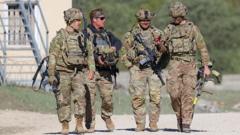
    The United States announced on Wednesday that it would be reducing its troop levels in Germany by approximately 5,000 soldiers, a move that comes amid a heated dispute between the two allies over Iran.

    According to sources within the Pentagon, the decision was made after weeks of tension and recrimination between US President Donald Trump and German Chancellor Angela Merz. The spat began when Trump tweeted that Germany owed him $130 billion in “unpaid war costs,” sparking outrage from Berlin.

    In a statement released on Wednesday, the State Department announced that the reduction in troops would take place over the course of several months, with no exact timeline specified. “The United States is committed to maintaining its military presence in Europe, but we must ensure that our deployments are aligned with our national security interests,” said a spokesperson for the department.

    Merz had been critical of Trump’s characterization of Germany’s contribution to NATO, and her government had refused to back down on its commitment to meet its defense spending targets. The move has been seen by many as an attempt by the Trump administration to isolate Berlin and undermine its authority within the transatlantic alliance.

    “This decision is a betrayal of the trust between our two nations,” said Merz in a statement released earlier this week. “We have long been partners with the United States, but it seems that we are no longer on the same page.”

    NATO officials have struggled to contain the fallout from the dispute, as member states begin to question their own obligations to meet defense spending targets set by the alliance.

    The 5,000-strong US military presence in Germany is one of the largest outside of the United States itself. It includes troops from various branches of the US military, including the Army, Navy, Air Force, and Special Operations Command.

    Analysts say that the move could have significant implications for regional security, particularly as tensions with Iran continue to escalate. The US has deployed additional troops to the Middle East in response to concerns about Iranian aggression, while Germany and other European nations have called for a more measured approach.

    The decision also comes amid growing unease within the German government over its own defense spending obligations. Berlin had long been committed to meeting NATO’s target of 2% of GDP spent on defense by 2024, but recent delays and cost overruns have raised questions about whether this goal can be met.

    As tensions between Washington and Berlin continue to simmer, diplomats from both countries are working behind the scenes to find a way forward. A senior US official said that while the reduction in troops was not reversible, there were still hopes for a diplomatic breakthrough on the Iranian issue.

    “Both sides want to avoid miscalculation,” the official said. “We’re trying to build trust again.”

    Stay informed with headlines.com

  • Nationwide SIM Card Testing Begins Across India, Including Hyderabad

    Nationwide SIM Card Testing Begins Across India, Including Hyderabad

    HYDERABAD, MAY 2 – In a nationwide effort to test the security of the Indian cellular network, the Telecom Regulatory Authority of India (TRAI) announced that it would be conducting a comprehensive exercise on May 2. The SIM card testing, which is part of the country’s ongoing efforts to strengthen its telecommunications infrastructure, sent out test alerts to millions of phone users across the nation, including in Hyderabad.

    The TRAI, which is responsible for regulating and overseeing India’s mobile communication industry, had announced earlier this month that it would be conducting a nationwide SIM card testing exercise. The purpose of the exercise was to identify vulnerabilities in the Indian cellular network and to ensure that it could withstand cyber-attacks and other forms of malicious activity.

    According to sources, millions of phone users across India received test alerts on their phones on May 2, which were sent out by the TRAI as part of its testing exercise. The test messages were designed to mimic real-world cyber-attacks and were intended to gauge the effectiveness of the Indian cellular network’s security measures.

    The Hyderabad residents who received the test alerts reported that they received a message on their phones stating that “SIM card information compromised”. The message was followed by a series of code snippets and other technical details, which were intended to mimic the behavior of hackers.

    While some users in Hyderabad reported receiving the test alert messages, others claimed not to have received any message at all. The discrepancy has raised questions about the efficacy of the TRAI’s testing exercise and whether it was effective in simulating real-world cyber-attacks.

    The TRAI has said that the test alerts were sent out as part of its efforts to ensure that India’s telecommunications infrastructure was secure and resilient against cyber threats. According to the regulator, the test messages were designed to mimic real-world attacks and to gauge the response of mobile network operators in case of a real attack.

    Experts have praised the TRAI for taking proactive steps to strengthen India’s telecommunications infrastructure, but some have also expressed concerns about the potential impact on the public. The test alerts may have caused alarm among users who received them, particularly if they were not aware that it was part of a testing exercise.

    In conclusion, the nationwide SIM card testing exercise is an important step towards strengthening India’s telecommunications infrastructure and ensuring its security against cyber threats. While some users in Hyderabad reported receiving test alert messages, others claimed not to have received any message at all. The TRAI has said that the test alerts were sent out as part of its efforts to ensure that India’s telecommunications infrastructure was secure and resilient.

    Stay informed with headlaines.com

  • Pentagon Says US Military to Be an ‘AI-First’ Fighting Force

    Pentagon Says US Military to Be an ‘AI-First’ Fighting Force

    The United States military has announced that it will shift its focus towards artificial intelligence (AI) as a key component of its future fighting force. The move is part of the Pentagon’s efforts to modernize its capabilities and stay ahead of emerging threats.

    In recent weeks, the US military has signed eight new contracts with major tech firms, including Amazon, Microsoft, and Google, to develop and deploy AI-powered systems across various domains. These deals are worth billions of dollars and mark a significant expansion of the Pentagon’s AI capabilities.

    According to officials, the AI-first approach will enable the US military to better detect and respond to emerging threats, such as cyberattacks and autonomous weapons. The technology will also be used to improve situational awareness, enhance decision-making, and increase the effectiveness of military operations.

    The Pentagon has been investing heavily in AI research and development over the past decade, with a focus on developing new technologies that can support military operations. However, this latest push marks a significant shift towards integrating AI into every aspect of the military’s strategy and tactics.

    “This is a fundamental transformation of our approach to warfare,” said a senior Pentagon official, who spoke on condition of anonymity. “We’re moving from an analog to a digital mindset, where AI will be used to analyze vast amounts of data, identify patterns, and make decisions that can inform our actions on the battlefield.”

    The AI-first strategy is also expected to have significant implications for the way the US military operates in the future. For example, autonomous systems may play a larger role in combat operations, while human soldiers may focus more on high-level decision-making and leadership.

    The Pentagon’s efforts to develop AI-powered systems are also seen as an effort to counter emerging threats from other nations. China and Russia, in particular, have been investing heavily in AI research and development, and the US military is keenly aware of the need to stay ahead of these rival powers.

    “This is a critical moment for our nation’s security,” said a Pentagon spokesperson. “We recognize that AI will play an increasingly important role in future conflicts, and we’re committed to staying ahead of the curve.”

    The contracts signed by the US military with major tech firms are just the beginning of a long-term effort to develop and deploy AI-powered systems across various domains. As the technology continues to evolve, it’s likely that we’ll see significant improvements in the way the US military operates on the battlefield.

    Stay informed with headlines.com

  • Replit’s Amjad Masad: We Won’t Sell, Even If Cursor Deal Falls Through

    Replit CEO Amjad Masad sent a clear message to the tech industry on Thursday night at TechCrunch’s sold-out StrictlyVC event in San Francisco: Replit will not be selling, regardless of what happens with rival Cursor. The comments came just hours after reports emerged that Cursor was in talks to be acquired by SpaceX for a whopping $60 billion.

    Masad, who took the stage to address the growing speculation surrounding Replit’s future, seemed unphased by the news. When asked directly if he would consider selling the company, Masad responded with a resounding “no.” He emphasized that Replit has received significant funding from investors and is confident in its ability to drive growth without outside backing.

    “We’ve got a great team, a great product, and a great vision for what we want to achieve,” Masad said. “We’re not interested in being acquired or sold at this point in time. We’re focused on executing our strategy and making Replit the best it can be.”

    Masad’s comments were likely aimed at countering the narrative that Replit is vulnerable to acquisition due to its growing valuation and increasing attention from industry rivals like Cursor. However, some observers see Masad’s stance as a bold move to establish Replit as an independent player in the market.

    Cursor, which has been aggressively expanding its offerings in the code editor space, has reportedly received significant investment from various sources, including a rumored $1 billion round led by a major venture capital firm. The acquisition deal with SpaceX would likely bring Cursor’s valuation into the stratosphere, potentially putting pressure on Replit to respond.

    Masad acknowledged that he was aware of the deal reports and had discussed them with his team. “We’re not surprised that other companies are trying to acquire us,” he said. “But we’re also not interested in being acquired. We believe that our vision for Replit is better served by continuing to operate independently.”

    When asked about the implications of a Cursor acquisition on Replit’s strategy, Masad was characteristically coy. “We’ll continue to focus on what we do best: building great tools for developers and making them successful,” he said. “If other companies want to compete with us, that’s fine. But we’re not going anywhere.”

    The comments from Masad were likely aimed at sending a message to Replit’s fans and investors. The company has been rapidly expanding its user base and feature set in recent months, thanks in part to the growing demand for code editors and other developer tools.

    Replit has received significant funding from various sources, including a reported $150 million round led by a major venture capital firm. The company has also expanded its product offerings in recent months, introducing new features and integrations with popular developer tools.

    Stay informed with headlines.com

  • Iranian War Protester Clings to Washington Bridge, Demands End to Military Action

    Iranian War Protester Clings to Washington Bridge, Demands End to Military Action

    An Iranian protester has taken to the top of Washington’s Frederick Douglass Memorial Bridge, refusing to come down as he clings to his demand for an end to military action against Iran. The 45-year-old man, identified as Amir Hassan, has been perched on the bridge since early yesterday morning, sparking a mix of concern and solidarity from passersby.

    According to eyewitnesses, Hassan was seen scaling the bridge’s support structure before taking up residence at the apex. He has since donned a makeshift hat made from an American flag and a black t-shirt emblazoned with “No War on Iran.”

    “I just want to be heard,” Hassan told Al Jazeera in a live interview from his perch, his voice carrying across the city. “We cannot sit idly by while our government launches missile strikes against a sovereign nation. It is unjust, it is immoral, and it must stop now.”

    Hassan’s protest comes as tensions between Iran and the United States continue to escalate. In recent weeks, both countries have engaged in a series of aggressive actions, including cyberattacks and military posturing.

    The Iranian government has condemned the war on Iran as a “heinous crime” and a “violation of international law.” Hassan, who lives in Maryland with his family, said he was inspired to take action by the plight of ordinary Iranians caught up in the conflict.

    “My brother is a doctor,” he explained. “He’s been working tirelessly to care for the wounded and the sick. But every time there’s an escalation, he fears that he’ll be arrested or worse. I won’t let that happen.”

    Hassan’s actions have sparked widespread attention on social media, with many expressing support for his cause. Some have even joined him in solidarity, holding “No War on Iran” signs and chanting slogans as they walk beneath the bridge.

    As the standoff continues, authorities are working to negotiate Hassan’s release. A spokesperson for the Washington Metropolitan Police Department said that officers were “engaging with the protester to resolve the situation peacefully.”

    However, Hassan remains resolute, refusing to budge from his perch despite the growing pressure. When asked if he was prepared to face arrest or other consequences, he replied simply: “I’m willing to do whatever it takes to make my voice heard.”

    As the sun sets over Washington, Hassan’s defiant words echo across the city, a powerful symbol of resistance in a time of war. For many, his actions serve as a reminder that even the smallest acts of courage can have a profound impact on the world.

    Stay informed with headlines.com