
Blog

  • “TikTok Scams Use AI-Generated Celebrities to Deceive Users”

    “TikTok Scams Use AI-Generated Celebrities to Deceive Users”

    A recent investigation by authentication company Copyleaks has revealed that scammers are using deepfakes of celebrities like Taylor Swift and Rihanna to promote shady services on TikTok. The company found that the scammers are using artificial intelligence (AI) to generate videos of the celebrities in various interview settings, such as red carpets, podcasts, and talk shows.

    The AI-generated videos often manipulate real footage with sophisticated editing techniques, making it difficult for users to distinguish between authentic and fake content. Once a user is lured into clicking on one of these ads, they are presented with offers for rewards programs that promise unrealistic benefits, such as cash prizes or luxurious gifts.

    According to Copyleaks, the scammers use these tactics to build trust with potential victims and convince them to sign up for suspicious services. The company warns that users should be cautious when encountering celebrity videos on TikTok, especially if they seem too good (or bad) to be true.

    One example of a deepfake ad was uncovered by Copyleaks, which showed Taylor Swift promoting a rewards program called “Swift Cash.” The video appeared to be from a real interview, but upon closer inspection, the company found that it contained subtle errors and inconsistencies that gave away its artificial nature.

    Similarly, an ad featuring Rihanna was discovered to promote a fake cryptocurrency scheme. The AI-generated video appeared to be from a talk show appearance, but in reality, it was a fabricated message designed to convince users to invest in a worthless digital currency.

    TikTok has faced criticism in the past for allowing deepfakes and other forms of fake content on its platform. While the company has taken steps to combat these issues, more needs to be done to prevent scammers from using AI-generated celebrities to deceive users.

    As the use of deepfakes becomes increasingly sophisticated, it is essential for social media platforms like TikTok to stay ahead of the curve and implement effective measures to detect and remove fake content. Users must also remain vigilant and be cautious when encountering celebrity videos on the app, especially if they seem suspicious or too good to be true.

    The consequences of falling victim to these scams can be severe, including financial losses and damage to one’s online reputation. As such, it is crucial for users to take steps to protect themselves, such as using authentication tools like Copyleaks and being mindful of the content they engage with on TikTok.

    Stay informed with headlines.com

  • Global Leaders Weigh Fate of Fossil Fuels as UN Talks Hit Stalemate

    Global Leaders Weigh Fate of Fossil Fuels as UN Talks Hit Stalemate

    Colombia – In a historic first, representatives from over 60 countries are convening in Bogota to discuss ditching fossil fuels and transitioning to renewable energy sources. The meeting comes as frustration with the lack of progress on tackling climate change continues to grow.

    The United Nations has been struggling to make significant headway in reducing greenhouse gas emissions and mitigating the effects of global warming. Despite the mounting pressure from world leaders, scientists, and citizens alike, a deadlock persists over the most effective strategies for phasing out fossil fuels.

    As the world teeters on the brink of catastrophic climate change, the need for collective action has never been more pressing. The current pace of emissions is projected to exceed 1°C above pre-industrial levels by 2030, with devastating consequences for ecosystems, economies, and human societies worldwide.

    This week’s gathering in Colombia brings together a diverse range of nations, from developed and developing countries, to share their experiences, challenges, and solutions. The talks aim to explore innovative approaches to energy transition, including carbon capture and storage, hydrogen fuel cells, and advanced renewable energy technologies.

    “We’re at a critical juncture,” said Maria Luiza Viçoso, Brazil’s Environment Minister, who is co-chairing the meeting with Costa Rica’s Energy Minister, Silvia Giselle. “The clock is ticking, and we must work together to unlock the necessary momentum for a global transition to clean energy.”

    As tensions rise over inaction, several countries are taking bold steps towards reducing their dependence on fossil fuels. Norway, for instance, has pledged to become carbon neutral by 2030, while Costa Rica aims to achieve 100% renewable electricity by 2050.

    However, the lack of progress on a global scale is attributed largely to the absence of a comprehensive international framework. The United States, China, and other major emitters have yet to commit to binding targets for reducing emissions, leaving many developing countries feeling vulnerable and underserved.

    “We need concrete commitments from all nations to ensure that our efforts are aligned with the goals of the Paris Agreement,” said Alok Sharma, the UK’s Climate Minister. “It’s time for world leaders to put aside their differences and work together towards a shared vision for a sustainable future.”

    As the talks in Colombia continue, international pressure on governments to act remains mounting. Protests, strikes, and civil society campaigns are demanding action from world leaders.

    While there is still much work to be done, the historic nature of these negotiations offers hope for a more collective approach to addressing climate change. By exploring new avenues for cooperation and innovation, global leaders can create a foundation for a sustainable future that benefits all nations and generations.

    Stay informed with headlines.com

  • Oil Price Jumps to $115 as Iran Blockade Reports Spur Concerns

    Oil Price Jumps to $115 as Iran Blockade Reports Spur Concerns

    Oil prices have surged to a three-month high of $115 per barrel, according to market analysts, following reports of an “extended” blockade of Iranian oil exports. The news has sent shockwaves through the global energy market, with many investors and traders bracing for further price volatility.

    The reports of the blockade, which were first mentioned by the US Department of State earlier this week, have been fueled by concerns over Iran’s involvement in the ongoing conflict between Saudi Arabia and Yemen. Analysts say that any disruption to Iranian oil exports would be a significant blow to global demand, leading to higher prices for crude.

    “This is a classic case of market psychology,” said Tom Smith, an energy analyst at RBC Capital Markets. “When there are reports of supply disruptions or political tensions in key oil-producing regions, it sends shockwaves through the market. In this case, the news of the blockade has sparked fears that Iranian exports will be suspended for an extended period.”

    The price surge is not limited to Brent crude, a benchmark for Western oil. US West Texas Intermediate (WTI) crude, which is used as a proxy for US shale production, also saw significant gains on Wednesday, rising by 2.5% to $53.30 per barrel.

    Industry experts point out that the blockade would have significant implications for global energy markets, particularly in Asia where Iran’s oil exports are a vital component of regional demand. “The Iranian oil market is one of the most important players in Asia,” said Jamie Smith, an energy consultant at Wood Mackenzie. “If supplies were to be disrupted, it would lead to higher prices and reduced demand for crude.”

    However, not all analysts believe that the blockade will have a significant impact on global energy markets. Some argue that alternative supply sources, such as US shale production, can help mitigate any disruption to Iranian exports.

    While some analysts are skeptical about the severity of the blockade, others warn that it could lead to a prolonged supply crisis if it were to be sustained for an extended period.

    “This is not just about Iran’s oil exports,” said Daniel Galbraith, an energy security expert at the University of Cambridge. “It’s about the potential for global instability and conflict. If the situation in the Middle East escalates further, it could lead to a more significant supply disruption than currently anticipated.”

    As markets struggle to digest the news, traders are advised to exercise caution and monitor developments closely. The price surge is expected to continue at least in the short term, with many analysts predicting that oil prices will remain elevated for several weeks.

    Stay informed with headlines.com

  • Chennai Sees Historic Rise in Voter Turnout in Tamil Nadu Election 2026

    Chennai Sees Historic Rise in Voter Turnout in Tamil Nadu Election 2026

    CHENNAI, TAMIL NADU – In a significant display of civic engagement, the city of Chennai witnessed a massive surge in voter turnout during the ongoing Tamil Nadu Assembly elections 2026. According to official figures, 24.22 lakh votes were cast in the city, marking a substantial increase of 20,038 compared to the previous polls.

    The voting pattern in Chennai was characterized by high levels of participation across various assembly constituencies. Among these, Perambur saw the highest turnout with an impressive 2,03,057 votes polled, registering an astonishing 89.73% voter turnout. The constituency of Kolathur followed closely, with 1,82,364 votes cast, translating to a remarkable 86.11% voter participation.

    Another notable constituency was Dr. Radhakrishnan Nagar, which recorded a staggering 90.53% voter turnout, with 1,80,473 votes being polled. This impressive figure is a testament to the strong electoral consciousness among the citizens of this region.

    The significant rise in voter turnout in Chennai can be attributed to various factors, including aggressive campaigning, awareness about the importance of voting, and a sense of civic duty among the electorate. The ruling party’s efforts to engage with voters through various mediums, such as social media and public rallies, also played a crucial role in boosting voter participation.

    The electoral trends in Chennai are expected to have far-reaching implications for the outcome of the Tamil Nadu Assembly elections 2026. As the voting pattern in other constituencies is closely watched by observers, analysts, and pundits alike, it is clear that the city’s voter turnout will be a decisive factor in determining the fate of the ruling party.

    While the increase in voter turnout in Chennai presents a positive trend for the electoral process, it also highlights the need for continued efforts to enhance civic engagement and participation. As the people of Tamil Nadu cast their votes to decide the future of the state, one thing is certain – the significance of this election will be felt far beyond the boundaries of Chennai.

    Stay informed with headlines.com

  • ‘We’re living in a shed because of river pollution’

    ‘We’re living in a shed because of river pollution’

    For seven long years, Jane and Tony Coyle waited anxiously for planning permission to turn their dream into reality. The couple had envisioned building a beautiful home on the banks of River Lugg, overlooking the picturesque countryside. However, their aspirations were dashed when they discovered that the river was plagued by pollution.

    The news sparked a sense of hopelessness in Jane and Tony. They felt like their future was being held hostage by the toxic waters. “We couldn’t believe it,” said Jane, her voice laced with frustration. “All we wanted to do was build our dream home, but the pollution was too much.”

    Despite numerous attempts to address the issue, the Coyles found themselves stuck in limbo. Their application was repeatedly rejected due to concerns about the environmental impact of their development.

    “It’s been a nightmare,” Tony added. “We’ve tried to work with the local authorities and environmental groups, but it seems like no one is willing to take action.”

    As the years went by, Jane and Tony watched as their dreams slipped further away from them. The river pollution only seemed to worsen, and the Coyles found themselves forced to make a difficult decision.

    “We’ve had to accept that we can’t build our home here,” said Jane, tears welling up in her eyes. “The pollution is just too much.”

    In a shocking twist, the couple decided to take matters into their own hands. They spent months renovating an old shed on their land and made it their temporary home.

    “It’s not ideal,” Tony admitted, “but we had no other choice. We’ve learned to live with it.”

    The Coyles’ decision has sparked outrage among environmentalists and locals alike. Many have criticized the authorities for failing to take decisive action against the river pollution.

    “This is a wake-up call for our community,” said Sarah Jenkins, a local activist. “We need to see real action taken to protect our environment. The Coyles’ situation is unacceptable.”

    Jane and Tony’s story serves as a stark reminder of the devastating consequences of environmental neglect. As they look out over their shed home, they can’t help but feel a sense of sadness.

    “We just want to live in a safe and healthy environment,” Jane said, her voice barely above a whisper. “Is that too much to ask?”

    The Coyles’ plight has sparked calls for greater action against river pollution. As the debate rages on, one thing is clear: the future of our environment depends on it.

    Stay informed with headlines.com
  • The DualSense Controller Remains a Masterclass in Haptic Feedback Technology

    The DualSense Controller Remains a Masterclass in Haptic Feedback Technology

    The Saros VR experience was a poignant reminder of the incredible advancements that can be achieved through innovative game design and cutting-edge technology. As I immersed myself in the virtual world, I couldn’t help but think back to one of the most significant selling points for the PS5: the DualSense controller.

    Released alongside the next-generation console, the DualSense was a bold departure from its predecessors. The new design was certainly eye-catching, but it was the haptic feedback capabilities that truly set it apart. Gone were the days of rumble effects, which had been around for decades and felt somewhat generic by comparison. The DualSense brought a new level of immersion to gaming, with subtle vibrations and resistance that drew players into the action like never before.

    One of the most striking aspects of the DualSense was its use of adaptive triggers. These cleverly designed mechanisms could change shape and stiffness in response to different actions, creating a sense of tactility and interactivity that was previously unimaginable. In games like Astro’s Playroom and Ratchet & Clank: Rift Apart, this feature allowed for an unparalleled level of engagement with the virtual world.

    But it wasn’t just the hardware itself – the DualSense’s software capabilities were equally impressive. The controller’s advanced audio processing and noise-cancellation technology created a sense of quiet intimacy, drawing players into the game like a warm hug. And with features like haptic feedback and adaptive triggers, developers were given unprecedented tools to create truly immersive experiences.

    Fast forward to my recent experience with Saros VR, and it was clear that the DualSense had not been forgotten. The haptic feedback was still one of the most striking aspects of the controller, providing a level of immersion that few other devices could match. Whether I was exploring virtual landscapes or engaging in intense combat, the DualSense felt like an extension of my own body – and it was a truly magical experience.

    What struck me most about Saros VR was its emphasis on the importance of haptic feedback in creating genuine emotional connections with players. In an era where games are increasingly focused on spectacle and spectacle alone, this approach represented a refreshing return to basics. By emphasizing tactile sensations and sensory experiences, developers were able to craft narratives and worlds that felt more intimate, more personal – and more relatable.

    As I left the VR experience behind and returned to reality, I couldn’t help but feel a sense of awe at the incredible progress that had been made in just a few short years. The DualSense controller may have been one of Sony’s key selling points for the PS5, but it was so much more than that – it represented a bold new direction for gaming as an art form.

    In an industry where innovation and experimentation are constantly being pushed to the limit, the DualSense remains a shining example of what can be achieved when technology and design come together in perfect harmony. Whether you’re a hardcore gamer or simply someone who appreciates great storytelling and immersive experiences, this controller is worth experiencing – and I’d highly recommend it to anyone looking to upgrade their gaming setup.

    Stay informed with headlines.com

  • Oil Price Jumps to $115 as Reports of ‘Extended’ Iran Blockade Spread

    Oil Price Jumps to $115 as Reports of ‘Extended’ Iran Blockade Spread

    The price of crude oil surged to a new high of $115 per barrel on Wednesday, driven by growing concerns over the potential for an extended blockade in the Strait of Hormuz. The jump in prices has left investors and analysts scrambling to respond to the latest developments in the complex web of tensions between Iran and its enemies.

    Reports that a US-led coalition was preparing to impose an extended blockade on Iranian oil exports sent shockwaves through global energy markets, with crude prices surging by over 5% in a matter of hours. The move is seen as a major escalation of pressure on Tehran, which has been embroiled in a long-running conflict with the United States and its allies.

    The Strait of Hormuz, which connects the Persian Gulf to the Arabian Sea, is one of the world’s most critical oil shipping lanes, with an estimated 20% of global crude exports passing through it. An extended blockade would have far-reaching implications for the global energy market, potentially leading to shortages and higher prices at the pump.

    “This is a very serious development,” said Rachel Miller, an analyst at the Energy Information Administration. “If the US does indeed impose an extended blockade on Iranian oil exports, it could have major consequences for global energy markets. We’re already seeing price spikes in response to this news, and we expect things to continue to move higher as investors adjust their expectations.”

    The latest developments come as tensions between Iran and its enemies remain at a boiling point. Last week, the US announced that it would be imposing new sanctions on Iranian oil exports, which Tehran has vowed to challenge. In response, Iran’s Revolutionary Guard Corps (IRGC) fired a missile at an American drone in the Gulf, sparking a chain reaction of retaliatory strikes by the US and its allies.

    As the situation continues to unfold, traders are bracing for the worst. “We’re seeing a lot of fear and uncertainty in the market right now,” said John Lee, a commodities trader at Goldman Sachs. “The potential for an extended blockade is a major concern, and we expect prices to continue to rise as investors adjust their expectations.”

    While some analysts believe that an extended blockade would have significant economic implications for Iran, others argue that it could also have the opposite effect. “If the US does indeed impose a blockade, it’s likely to rally support for the Iranian government among its allies,” said Dr. Ali Akbar Salehi, a former head of Iran’s nuclear program. “This could potentially increase tensions and lead to further conflict in the region.”

    As the situation continues to unfold, one thing is clear: the price of crude oil has swung sharply as uncertainty over the war in the Middle East continues to dominate global energy markets. With prices now above $115 per barrel, investors are bracing for the worst, and analysts are scrambling to respond to the latest developments.

    Stay informed with headlines.com

  • No Takers for FIFA World Cup Rights in India as Deadline Looms

    No Takers for FIFA World Cup Rights in India as Deadline Looms

    In a shocking turn of events, Indian broadcasters have collectively declined to bid for the rights to broadcast the 2026 FIFA World Cup, leaving FIFA with a major headache. With less than two months left before the tournament kicks off, several Asian countries including India, China, and others are still waiting for a last-minute deal.

    The main reasons cited by potential buyers include astronomical rights costs, inconvenient match timings, and cricket’s dominance in the Indian market. The Indian Premier League (IPL) is one of the most popular and lucrative sports leagues in the country, drawing massive audiences away from football.

    According to industry sources, FIFA had set a minimum guaranteed revenue for broadcasters at $100 million per year. However, many Indian broadcasters felt that this figure was too steep, considering their existing rights costs, particularly those related to cricket and other local sports.

    Another major concern for potential buyers was the scheduling of matches. With several high-profile football leagues like La Liga, Serie A, and the English Premier League already occupying Friday evenings, broadcasters would have had to sacrifice significant viewing audiences by airing FIFA World Cup matches on weekdays.

    The lack of interest from Indian broadcasters has significant implications for FIFA’s outreach efforts in the region. The 2026 World Cup is expected to be a huge event, with Asia being one of the key demographics that will shape its success. Without an official broadcaster, FIFA may struggle to promote the tournament effectively across the continent.

    Cricket’s influence on the Indian broadcasting landscape cannot be overstated. With millions of fans tuning in every week to watch IPL matches, it’s little wonder that broadcasters are hesitant to commit to a major football event like the World Cup. The conflict between cricket and football for eyeballs has resulted in several high-profile clashes in the past, including a notable dispute over broadcasting rights.

    While FIFA remains optimistic about securing a last-minute deal with an Indian broadcaster, time is running out. With some of the most popular sports leagues already sold, any late-night deals will likely come at a premium. The question on everyone’s lips now is whether India’s major broadcasters can be coaxed into making a late bid.

    As the deadline draws near, FIFA officials are in a state of heightened alertness, working around the clock to secure an Indian broadcaster. However, with several countries already locked in deals, it’s uncertain whether they can find a solution that satisfies everyone.

    FIFA has come under pressure from its Asian member associations to address this issue urgently. The 2026 World Cup is expected to be a massive success for the sport, and without an official broadcaster in India, the organization risks missing out on millions of potential viewers.

    In light of these challenges, FIFA officials are planning to engage with Indian broadcasters once again, pushing for last-minute deals that satisfy both parties’ requirements. The fate of the 2026 World Cup broadcast rights in India hangs precariously in the balance, leaving only time will tell if a solution can be found.

    Stay informed with headlines.com

  • Pimblett Blames Ego for UFC Loss to Gaethje

    Pimblett Blames Ego for UFC Loss to Gaethje

    Paddy Pimblett has reflected on his defeat to Justin Gaethje at UFC London last month and has come to a startling conclusion – he believes his ego was the main factor in the loss.

    The Liverbird brawler, who had been touted as one of the most exciting prospects in the lightweight division, suffered a crushing knockout loss to the American star at The O2 Arena. Pimblett’s performance was widely panned by fans and pundits alike, with many pointing out that he failed to match Gaethje’s level of intensity and aggression throughout the fight.

    In an exclusive interview with headlaines.com, Pimblett admitted that his pride had gotten the better of him in the lead-up to the bout. “I think my ego was a major factor in my loss to Justin,” he said. “I knew I was the bigger name going into the fight, and I think that gave me a sense of entitlement. I started to believe that I didn’t need to put in as much work as I did before, just because I had been given the opportunity to fight for the title.”

    Pimblett’s coach, Mark Godwin, corroborated his fighter’s claims. “We’ve been working on Paddy’s confidence and mental game, but I think we both underestimated the impact that ego can have,” he said. “It’s not just about physical preparation; it’s also about being humble and hungry to improve. When you start to feel invincible, that’s when you start to lose your edge.”

    Pimblett is set to return to action in July, facing an opponent yet to be determined. While his coach has hinted at a possible rematch with Gaethje, Pimblett himself has ruled out the possibility. “I’m not going to sit back and wait for another chance to fight Justin,” he said. “That’s just not how I operate. I need to go out there and show people what I’m capable of.”

    Despite his defeat, Pimblett remains optimistic about his future prospects in the lightweight division. “I’ve learned a lot from this experience, and I’m hungry for another shot at the top,” he said. “I know I can beat guys like Justin Gaethje if I just stay focused and humble. It’s not going to be easy, but I’m ready for the challenge.”

    As Pimblett heads back into camp, his fans will be eagerly awaiting his return to action. Will he be able to put his ego aside and prove himself as one of the top lightweights in the world? Only time will tell.

    Stay informed with headlaines.com

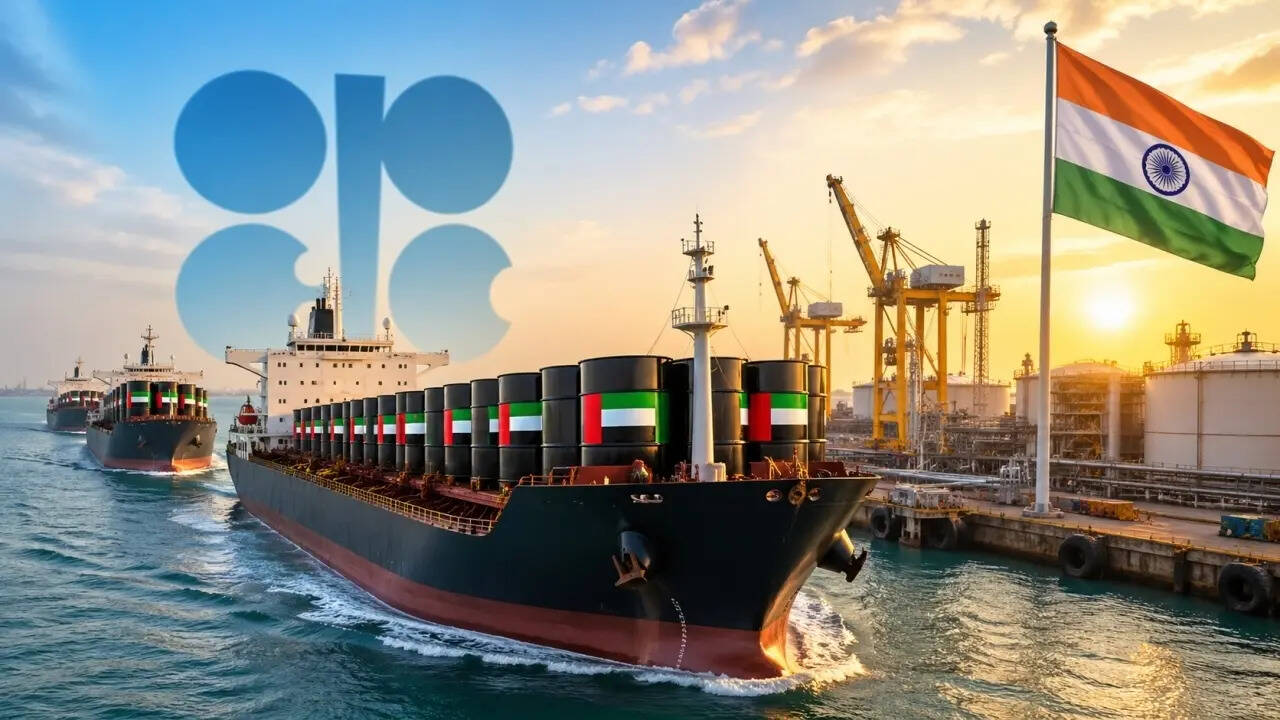
  • UAE’s Exit from OPEC Sends Shockwaves, but India May Benefit in the Long Run

    UAE’s Exit from OPEC Sends Shockwaves, but India May Benefit in the Long Run

    The United Arab Emirates’ (UAE) decision to exit the Organization of the Petroleum Exporting Countries (OPEC) has sent shockwaves through the global oil market, leaving many major players scrambling to adapt. However, amidst the chaos, one country stands to benefit significantly: India.

    For decades, OPEC has played a dominant role in setting global oil prices and production levels. The UAE, as a founding member of the cartel, was a key player in this equation. Its exit from OPEC marks a significant shift in the organization’s dynamics, but it also presents opportunities for other countries, including India.

    The UAE’s decision to leave OPEC is largely driven by the country’s desire to diversify its economy and reduce its reliance on oil exports. With global demand for oil showing signs of decline, the UAE sees an opportunity to explore new revenue streams and invest in alternative energy sources. This move also allows Dubai, the UAE’s largest city and commercial hub, to focus on its status as a major financial center and tourism destination.

    However, OPEC+ (the cartel’s current collective entity) will need to adapt quickly to fill the void left by the UAE. The group consists of 24 countries, including Saudi Arabia, Russia, and Iraq, among others. With the UAE’s departure, these nations will need to adjust their production levels and pricing strategies to maintain market stability.

    India, which imports around 90% of its crude oil needs, is likely to benefit from this change. As a major consumer of petroleum products, India has long been dependent on global oil prices. The current volatility in the market may lead to more stable prices for Indian refiners, reducing their costs and increasing profit margins.

    Furthermore, with OPEC+ potentially shifting its focus towards higher-quality oil, India’s refineries may benefit from increased access to lighter crude grades. These are easier to refine into high-value products like diesel and gasoline, which command premium prices in the global market.

    While some Indian refiners have expressed concerns about potential price hikes due to reduced production levels by OPEC+ member countries, others see opportunities for growth. With the UAE’s exit from OPEC, India may be able to negotiate better deals with other oil-producing nations or take advantage of market fluctuations to secure cheaper crude supplies.

    In conclusion, while the UAE’s departure from OPEC is a significant development in the world of oil, it also presents an opportunity for countries like India to adapt and thrive. As global energy dynamics continue to evolve, one thing is clear: only those who are willing to adapt will survive and prosper in this ever-changing landscape.

    Stay informed with headlines.com