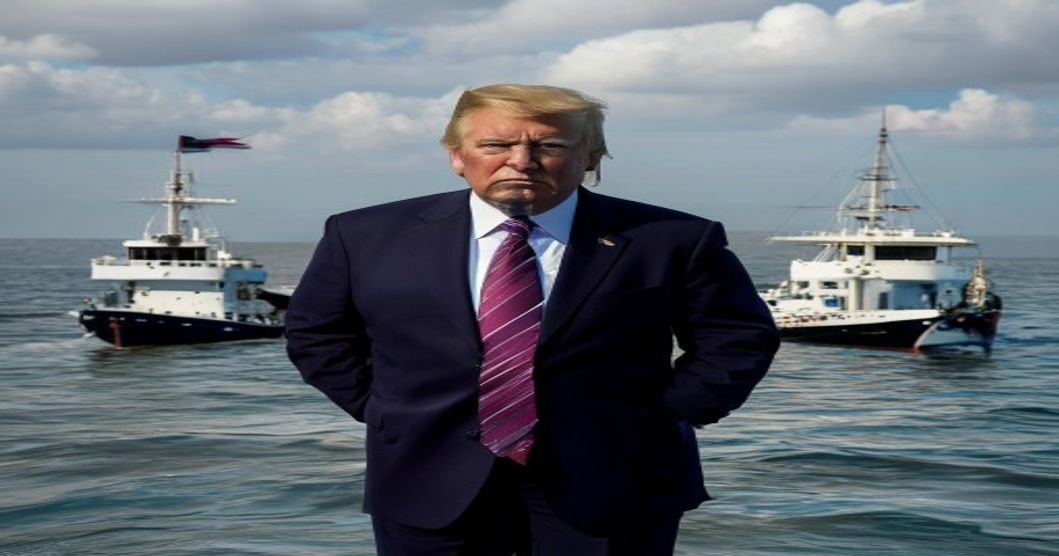
President Donald Trump announced on Tuesday that the United States will “guide” stranded ships through the Strait of Hormuz, a critical waterway connecting the Gulf of Oman to the Persian Gulf. The move comes as tensions between the U.S. and Iran remain high, following a series of incidents involving oil tankers and naval vessels in the region.
In a statement released earlier today, Trump said that the U.S. will provide “guidance” to ships navigating through the strait, which is a vital artery for global energy supplies. The president’s announcement was met with mixed reactions from experts and observers, who expressed concerns about the potential implications of such an action.
“This is a provocative move by the Trump administration,” said Dr. Patrick McFadden, a senior research fellow at the Royal Institute of International Affairs. “While it may be intended to reassure allies in the region, it also risks escalating tensions with Iran.”
The Strait of Hormuz has been a focal point of concern for years due to its strategic importance and the potential for miscalculation by regional powers. In recent months, several incidents have highlighted the risks faced by ships navigating through the waterway, including sabotage attacks on oil tankers and naval vessels.
Iran’s Islamic Revolutionary Guard Corps (IRGC) has been accused of involvement in these incidents, which the U.S. and other countries have widely condemned. The IRGC has denied any involvement, but its actions have raised concerns about the country’s military capabilities and its willingness to use force against Western interests.
The Trump administration’s decision to provide guidance to ships navigating through the strait is likely to be seen as a response to these incidents. However, it may also be perceived as an attempt to assert U.S. influence in the region and counter Iranian efforts to expand its military presence.
The move has been welcomed by some allies of the U.S., including Saudi Arabia and the United Arab Emirates, which have expressed concerns about Iran’s activities in the region. However, others have expressed caution, warning that such an action could escalate tensions and lead to further conflict.
In related news, Democrats face a challenging road ahead if they hope to gain control of the Senate in next month’s midterm elections. The current Republican majority is seen as vulnerable due to a number of factors, including low approval ratings for President Trump and a crowded field of Democratic challengers.
One key battleground state is Arizona, where Republican Senator John McCain passed away earlier this year. Democrat Kyrsten Sinema has been endorsed by many prominent Democrats, but her campaign’s messaging has focused on issues like healthcare and education, which may not resonate with voters in the deeply red state.
In Georgia, Democratic challenger Jon Ossoff faces a tough battle against incumbent Senator David Perdue, who has maintained strong ties to the Trump administration. Ossoff has focused on issues like healthcare and economic development, but his campaign’s efforts have been hindered by low fundraising totals.
North Carolina is another crucial battleground state, where Democrat Cal Cunningham challenges Senator Thom Tillis. Cunningham has gained support from many prominent Democrats, including former Vice President Joe Biden, who has endorsed the candidate in a video message.
Stay informed with headlines.com