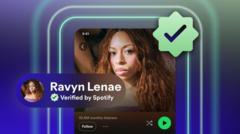
Spotify, the popular music streaming platform, has taken a significant step in ensuring the authenticity of its artists by introducing ‘Verified’ badges. This new feature aims to distinguish between human artists and artificial intelligence (AI) generated content.
The move comes as AI-generated music continues to gain traction, with some producers using algorithms to create convincing sounds that blur the lines between human creativity and machine-driven production. Spotify recognizes the importance of transparency in its platform and wants to reassure users that they are listening to genuine artistic expression.
To achieve this, Spotify will review a set of criteria for each artist’s ‘Verified’ badge. These include:
* Live dates: The frequency and consistency of an artist’s live performances will be taken into account. Spotify expects artists to regularly tour and engage with their fans in person.
* Social media presence: Artists must demonstrate an active online presence, posting updates, photos, and engaging with their audience on platforms like Instagram, Twitter, and Facebook.
* Studio work: The quality of an artist’s recorded music will be assessed, looking for signs of human creativity, experimentation, and evolution over time.
* Interviews and publications: Spotify will examine the artist’s interviews, articles, and published works to gauge their personality, style, and artistic vision.
By implementing these criteria, Spotify aims to create a more transparent and trustworthy environment for its users. The ‘Verified’ badge will be displayed next to an artist’s profile picture and bio, serving as a seal of authenticity that distinguishes them from AI-generated content.
This move has been welcomed by many artists, who see it as a vital step in protecting their creative rights and reputation. “As an artist, I understand the importance of being able to trust the platform I use to share my work,” said Lily Allen, British singer-songwriter and Spotify artist. “The introduction of ‘Verified’ badges will give fans a clear indication that they are listening to genuine music from real people, not just algorithms.”
However, not everyone is convinced that this move will effectively combat AI-generated music. Some argue that the criteria set by Spotify may be too narrow or open to interpretation.
“The ‘Verified’ badge is a nice gesture, but it’s not a foolproof solution,” said Dr. Andrew Straw, a musicologist at Indiana University. “AI-generated music can still be high-quality and creative, even if it doesn’t fit into the traditional mold of human artistic expression.”
Despite potential limitations, Spotify’s initiative represents an important step in acknowledging the evolving nature of creativity in the music industry. By prioritizing transparency and authenticity, the platform aims to foster a more inclusive and equitable environment for artists.
As the music streaming landscape continues to evolve, one thing is clear: the ‘Verified’ badge will play a significant role in shaping our understanding of what it means to be an artist in today’s digital age.
Stay informed with headlines.com