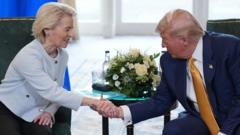
In a move that has sent shockwaves through the global automotive industry, US President Donald Trump announced yesterday that he plans to hike tariffs on cars imported from the European Union (EU) to 25%.
The current level of tariffs charged on goods entering the US from the EU is 15%, which was negotiated as part of a trade deal reached last July. However, Trump has stated that this level of tariffs is no longer sufficient and that he plans to increase them to 25% in an effort to level the playing field for American automakers.
The announcement came after months of tense negotiations between US and EU officials over trade policies. The EU has long been critical of US tariffs on European goods, arguing that they unfairly benefit American companies at the expense of their European counterparts.
“This is a terrible deal for the EU,” said European Commission President Ursula von der Leyen in response to Trump’s announcement. “We had thought that we had made significant concessions to reach the 15% tariff level last year, and now it seems that Mr. Trump has decided that this was not enough.”
Trump’s decision to increase tariffs on EU cars has sent shockwaves through the automotive industry, with many experts predicting a major impact on sales and production in both countries.
“This is a disaster for the global auto industry,” said Andrew Sorkin, a prominent business journalist. “Cars are one of the most traded goods in the world, and now we’re seeing a trade war that could have far-reaching consequences.”
The increase in tariffs will apply to all cars imported from the EU, regardless of their country of origin or manufacturer. However, some manufacturers may be able to avoid the higher tariffs by investing in new manufacturing facilities within the US.
“This is a big problem for European automakers,” said Fabrizio Grio, an automotive analyst at J.P. Morgan Chase. “Many companies rely on EU suppliers and have invested heavily in their networks there. Now they’re facing the prospect of having to pay much higher tariffs just to import their products.”
The EU has vowed to respond to Trump’s decision with its own set of countermeasures, including imposing tariffs on US goods such as whiskey, bourbon, and Harley-Davidson motorcycles.
“This is a classic case of trade war escalation,” said Mark Strobe, a trade expert at the University of Washington. “Both sides are digging in their heels and refusing to budge.”
The situation remains highly fluid, with both sides engaged in intense negotiations and counter-negotiations over the coming days and weeks.
As the world waits with bated breath for further developments, one thing is clear: this is a trade war that could have far-reaching consequences for global economic growth and trade patterns.
Stay informed with headlines.com